Thursday, April 29, 2010

Pitchers


I am experimenting with various pitcher shapes these days, trying to find one shape for water and one for wine. The wide-mouthed one on the right might work for wine.

Pitchers are like teapots; they have a physical character all to themselves which has a lot to do with body shape. A tall, thin one can look like a skinny school-master while a wide-based one could look like a happy grandmother. Like the animated teapots and teacups in Walt Disney movies, the shape of the pot invites us to anthropomorphize them into human likenesses when, in fact, they are not human.

We do that to God too sometimes. We project onto God the face and body-type of what we expect, depending on our perceptions of God or how the church or our clergy have treated us. Is God the old man or the Santa or the hippie earth-mother?

God is none of these. But what God is, I am sure...God is the one who is filling our pitcher with our favorite drink before we have even finished pouring!

Wednesday, April 28, 2010

Morning light


My favorite time of the day at Blackwater Bluff is the early morning. My favorite meal is breakfast, which has a lot to do with that, I admit. I like waking early - about 4:30 or 5:00 and making coffee to sit in the dark for a while. I watch the flames come back to life in the wood stove as a new set of logs is piled onto last night's coal-bed. And I wait with Kai. We wait together for the sun to rise.

Sometimes I wander into the studio to check on drying pots or to see that the kiln fired correctly. I then slide open the door to the chicken house (pictured above) to collect the day's offering and to thank them, out loud, for their gift of protein with which I will begin my day. They seem to be glad of the thanks. It seems the right thing to do.

The fears which may have plagued me in the middle of the night seem to loose their power as I begin my meditation time - me, God, a candle. When I meditate in my meditation room, Kai, my dog, lays down in the hall outside so that his head just peeks over the edge of the open door. From there he stares at me as if he is encouraging me (because sometimes prayer is dull and I am tempted to blow it off).

Easter always follows Lent and sunrise (even if unseen) always follows the darkness and fears of night. The sun does not take away the fears, but it places them in context of what we can see around us so that the fears and the evils in which we are moving are offset by the Hope and Faith that is ours for the taking. As Theresa of Avila has so beautifully said, "all shall be well....all things shall be well...all manner of things shall be well."

Sunday, April 25, 2010

Teapots


One of the items I make for the Canterbury Shaker Village is the great old-fashioned teapot. People who browse the Museum Store at the Shaker Village are not just looking for merchandise. Most of what can be found there can be found elsewhere. What people are looking for is a souvenir. And by that, I mean the French, etymological sense of the word. The direct translation is "up -come" which is to say that to buy or have a souvenir is to draw up from the memory an event so that it comes into the present.

In religious circles, the theological word for this is anamnesis - the drawing of a memory or past event into the present. "Do this in remembrance of me..." in which an act that happened ages ago is drawn into the present like a thread being drawn through a tapestry to add to its color and depth. In church, when we say the Eucharist, we are experiencing anamnesis and we have a souvenir in the bread and the wine. Something that happened in the past which is re-happening in the present.

By buying one of my teapots, people are seeking, in many cases, an icon to a simple lifestyle they saw in the Canterbury Shaker Village and in the remembering of the lifestyles of the Shakers. To make a cup of tea is to slow down. To sit with tea and be present to it is an important religious act in many cultures around the world both at meals and in religious ceremony.

Each teapot that comes off the wheel (I made 8 yesterday!) is set on the shelf to dry with a simple prayer asking God to breathe peace into the lives of those who drink their tea from this pot.

Wednesday, April 21, 2010

Ashes to ashes...


Times of rest and reflection are valuable to the body and to the soul. In my 20's and 30's I would fill my vacations and even my spiritual retreats full of so much busyness and activity and travels and chores that it was impossible to feel anything or think too much about anything. And that is precisely how I liked it. Work, noise and activity were my anesthesia to life. My motto was "If you don't have time to feel pain, then the pain does not exist."

That did not work very well. I mean, actually it worked like a charm to avoid the pain but it did nothing to reduce or dilute the pain. Nowadays I find that sitting with pain or sorrow, regret or confusion, betrayal or grief is the very best way to manage it so that the pain is dealt with and not expanded into bad choices or internalized cancers.

Currently I am on vacation. It has become, what our culture has begun to term a "stay cation." Money is tight and I had a hard internal job to do which required all my presence to myself to do and lots of time to consider afterwards. That kind of discernment cannot be done well on the run. So rather than take this week as a spiritual retreat in Rome (Plan A) using a small monastery in Rome's Travestere district, I decided to take the week as vacation and stay home to tend the garden, clean the house, make pottery, go on two walks a day with Kain, swim in the Blackwater River (whew! cold! but refreshing and so fun for Kai)and have close friends over for the kinds of dinner that requires all day to cook slowly (Ie: inexpensive meat!)

My job this week is to consider my life. What is going well? What is not going well? What would I like to change? What needs to be taken on? What needs to be let go of? (oops..a preposition at the end of my phrase-- my dead parents are rolling!)

As I walk and cook and make pots I am trying to think and pray. It means I am feeling pain I would like to anesthetize but it also means that I am sensing clarity which can come in no other way. The silence and the thinking breaks down the silos of compartmentalizing which so easily infects religious leaders and the exercise and fresh air and cool, long nights of sleep are slowly reviving me after a long season of stewardship work through two years of recession.

One of my projects in the pottery studio is a set of large jars for the Canterbury Shaker Village where I sell my pottery. These large jars could be used for all sorts of things including a great way to slow-roast baked beans! But I am making these for burial. When people die and they go to get their remains cremated, the funeral homes are selling them (in the midst of their cloudy-headedness of grief) jars for the cremains (the remains of ground bones which comes after burning a corpse) which can cost $500 - #$1,500 - for a lidded jar! Just a jar for goodness sake!

So I am making lidded jars for cremation- simple and un-decorated - like the Shakers would have insisted on. People buy them , keep them on the mantle piece and tell their children that it is for when they die. It seems morbid but it is just good planning - and economical at $250 per urn.

I keep cookies in mine. My will says "take out all but two of the cookies, place my cremains in the jar, seal the lid with epoxy (Lowe's for $3.00 - the kind that mingles two gels into one mix is the best) and bury me in a garden."

So as I make each urn, I think and pray for the person whose remains will one day be lovingly poured into it by grieving family members. Who knew that I would spend my vacation doing this? It is a great honor to participate in the lives of families this way. With every pot, I am reminded that we are bust the ashes and dust of the earth to which we will all one day be returned. The measure of our time on earth will be how much we loved others and how well we made choices which did good and not harm. The rest is up to God.

Sunday, April 18, 2010

The spice of life


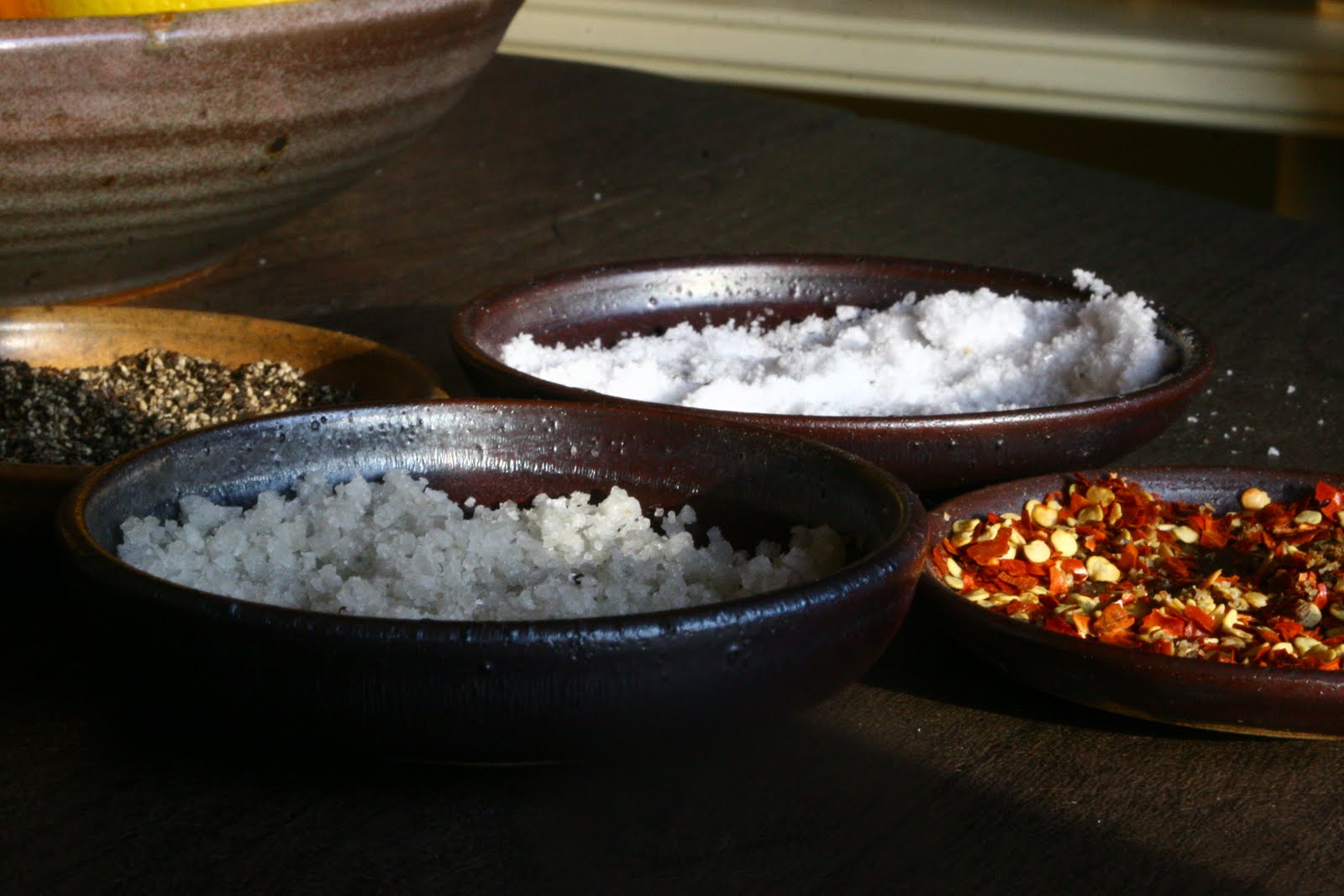
I keep three spices on the table at all times in small dishes I made for the purpose. Spices bring out the flavors of food but taken alone they are very strong. I like cracked pepper, and although I know that freshly ground pepper is always better, having it ready in a dish on the dinner table is easier. But I like it course so that I can taste the pepper. I have at least one if not two kinds of sea salt. I prefer the gray, moist version from the French coast but it is pricey so I usually default to kosher salt. And red pepper flakes are a must in this house. I love hot spice. I even learned to put hot pepper flakes in my peanut butter when I was living in Haiti. There they call it mamba peekay and it is wonderful on hot toast.

Once, when in front of a bunch of kids doing a children's sermon, I had to explain theodicy (why bad things happen when God could stop them.) The children's eyes were big and trusting and expectant. Kids know something is up. They know bad things can happen. They just want honest answers.

Now, I admit that if I were in charge, bad things would not happen, but then people would not be free to do whatever they wanted to either. It is one or the other; freedom or sinlessness. Bad things mostly happen on earth because of big and small evils done by humans. And like the wind currents which can change on the other side of the world because of a butterfly's wings flapping in this hemisphere, so too the evils which occur in Sudan are linked to my buying prepared food. Here I am being lazy and rich but the effect over there is that children starve. The two actions, when multiplied around the billions of people in the world, are magnified.

I do not believe in Evil. I only believe in evils. Evil sets God up as some sick watcher at a human game of death. But evils, those are the little choices we make - very small - seemingly inconsequential - which add up and hurt people.

When the children asked me why there is so much sadness and badness in the world, I admitted that I did not know. Any other answer they would have figured out to be a lie. But what I could say, and still can say, is that the pain and sadness I experience in life at the hands of others does get transformed by God into strength ; into a depth and a strange kind of shadows which raise the good of life into greater relief if and when I have eyes to see it.

In other words, pain and sadness and loss and grief are not pleasant when taken all at once but they do add something to life which would be missing without them. I think without them we would all be as spiritually shallow as your average rain puddle. And our spiritual depth connects us to God and helps us act with better choices. It is all designed for our becoming better and better with each generation.

Pain is like spice. Take a spoonful of nutmeg into your mouth and the taste is strong, gritty, earthy and bitter. But place that same spoon of nutmeg into some stewed apples and the apples change into something entirely different and quite delicious. Then taste the apples without the nutmeg and they seem dull.

Friday, April 16, 2010

The Ten Things


This photo was taken by one of my brothers at the monastery one day in the cloister garden while I was waiting for another brother to meet me there. We were going to look over the garden and consider what I would work on that afternoon. It was a cold day and I kept my hands under my cincture and my scapula, not out of monastic tradition (though the "custody of the hands and eyes" is an ancient monastic practice)but because it was cold out and I had been waiting a long time. Even now, as I see this photo I can see how forced the smile was - not because I was unhappy - I was quite happy - but because I was angry at my brother for leaving me to stand there for 45 minutes in the cold.

But this photo is also another kind of image for me. It is a kind of icon (icon simply means "image".) This icon reminds me that although I am no longer a novice and may never have been much of a monk (Brother Paul warned me that it took 50 years to become a monk and I think he was right!) I was in a very valuable "class" of sorts. I was being taught a few things which I needed to hear God say to me. What I sense God was saying includes the following. They were sayings meant for me, in my life, but others may sense that some ring true for them too:

1.Love the Gospel of John because it was written by people in fear who love Jesus and that is often going to be your situation as well.
2. Get the help you need to be in a constant state of conversion - a constant state of becoming God's hope for you.
3. Use the silence of your day and night as a laboratory for your conversion and your love-making with God.
4. Take time each night to consider your life - ask the hard questions about what wrongs I have committee no matter how small, so that goodness is given more and more spaciousness in your life.
5. Let go of grudges and judgment and unforgiveness for it only constipates you in every way.
6. Take time in the morning to pray so that you sensitize yourself to the whisperings of the Holy Spirit and so that you can hear in the midst of the noise of the life you live.
7. Get therapy - lots and lots of therapy! No. Seriously. Get therapy. You have had a hard life and you need to seek real healing.
8. Seek after truth and embrace it, lead where it leads and cost what it costs.
9. Choose your friends carefully and love your friends deeply.
10. Make time for deep rest, because it is only rest that will allow you to see clearly what needs to be seen and hear clearly what needs to be heard.

That monk's habit did not make me a monk but it was what I wore while I was being taught what I would need to know to make me a man.

Thursday, April 15, 2010

The Beloved Disciple


This was my first icon. I asked a friend in Athens to write it for me. He was an ex-Athonite monk with a twinkling smile and hands that looked like they had pulled on the mooring ropes of the Noah's Ark. The Icon is on carved wood with a thin layer of plaster and is about 18" by 14". It hangs in the center of my meditation wall and is an icon of great comfort and power for me. I use it when I am feeling frightened or sad or both, because the image of Jesus with John The Evangelist is one of welcome and comfort and intimacy.

In his new book on Goodness, Desmond Tutu makes the case for a balanced life in which there is a regular re-collection so that wrongs are caught early, before they become big and unwieldy like a huge kudzu-covered life. Tutu says that with daily prayer and "deep rest" we have the ability to see when we are making decisions which hurt us or others. He argues the same argument of Martin Luther King - that we are on a long, wide arc towards goodness and that to get there we must be very careful to make good choices often.

After two years of working hard to keep the effects of a national recession from debilitating the diocese we have been successful. Only 43% of non-profit organizations in the US have been saved from drops in their contributions and The Diocese of New Hampshire is, I am pleased to say, one of those. But I am now very tired and will take nine days to sit at Blackwater Bluff to rest - my first rest since November.

I do not plan to do much. I will garden and thin trees. Hike and swim the Blackwater river with Kai. I will make pottery and pickles and some good meals for friends. And I will sit with this image, glad to be in relationship with a God who would become human and then welcome me to lay my head on his chest.

Friday, April 9, 2010

Becoming


My dog Kai and I are making a small life in the woods of New Hampshire. When I am in pain, he seems to know it and I wish I knew more about how dogs can sense things like that. The dog I had to give away when I went to the monastery would sleep in my office at the church, but when a parishioner was in my office and in pain, Puck would wander over with stealth as if a ghost and put his tiny Yorkshire Terrier face on their shoe as he lay down next to them on the floor - from which he would stare up at them in silent solidarity.

Kai also stares. And dogs tend not to stare in general. They glance but they do not stare (well, sometimes when putting dinner out they do, but that is entirely different.) Dogs do not like being stared at. They like a glance and both happily and frequently give one back but they seem to break their no-stare rule when a person is in pain. They look at you in long-lasting solidarity.

Feeling the pain of life seems to be the key ingredient to growth. I wish it were some other way. Indeed it can be another way for those sad souls who have found ways to so compartmentalize their inner life that pain is not really felt as much as it is ordered and labeled and placed neatly in various mental shoe boxes in the crawl-spaces of the mind. For those people, growth is stunted or delayed until the boxes are opened and dealt with or until those sad implosions when a person opens the closet of their mind or it is busted open by life and all those shoe boxes tumble down on them and open at once in a tsunami of devastation.

But if we can feel pain as it comes to us without anesthetizing it with any of our modern, American intoxicants like work or sex or food or codependency or shopping - if we can really feel deeply the pain in the quiet of our prayer life and hand it up to God with tear-stained faces and helpless - yes, I mean really helpless begging for help - then there can be hope.

Hope is so different than faith. So much has been written about faith. It is the diva of Christian theology, walking red carpets of churches in shimmering Hollywood ball gowns and high heels and tiaras. But hope huddles in the crowds in a trench coat and bad hair under a floppy hat. Hope simply stands there keeping fear at bay - but only just.

Kai, when he sits there present to me but also staring off into who-knows-what, seems to be so rooted in the present moment that he becomes an icon to me - inviting me to do likewise. Faith has always had a futureish feeling to me. I like faith - don't get me wrong - I mean I am a priest and all, and it is a major part of my prayer and of my experience, but hope has a present-humility about it which appeals to me and soothes me when my mind keeps wanting to dart down the road of the future like an excited puppy or a nervous stock-trader.

When Kai just sits there and stares off into the present, he invites me out of my anesthesia (my drug of choice tends to be over-scheduling my life and my day) and into a safe-house of love in which I can sit with my pain and despair and feel it so deeply that it teaches me things I need to know about life. Not a lot but enough.

While I was a monk, I became the priest I had always wanted to become. While I am a potter on a farm in New Hampshire I have become the monk I had always wanted to become. And now, in my work in the church, I am finally becoming the man I had always wanted to become.

And in the end, I can see that life has been the anvil and pain has been the hammer and God has been the forge which is making this tool called "me." And though I find the blows hard and the fire hot and the anvil unyielding, I can sense that my "becoming" is well on its way.

Thursday, April 8, 2010

Do this in rememberance of me ...


I hosted a dinner for a friend's birthday in which this was the second course. It was a dinner which highlighted four wines from a winery in Vermont to which a small group of my friends and I went for a day excursion. This winery specialized in ice wine but also in fruit wine and since this was a summer party outside I chose a raspberry wine (first course; a rhubarb wine(second course; a maple wine (desert course) and a red Merlot (main course). It was one of those dinners you host very infrequently but it was fun to pull off and the wines were under $15 each though tasty.

This second course - the cheese course - was a soft, warm, aged brie with an olive tapinade on crustini and the wine was a rhubarb wine (pictured above thanks to a photographer at the party who wanted a souvenir.)

We sat at a huge wooden table cut from one Pine tree plank which sits 12 people. We ate and drank and told stories about the birthday boy. We laughed a lot and cried a bit and though nobody was even tipsy, people were having a great time - all loosened up and enjoying good, simple food. The cheese had been 60% off at Market Basket - they said it was old...isn't cheese supposed to be old!? The tapenade came from a bottle I found on a shelf at Building 23 1/2 in Nashua for 50 cents a jar. I guess the crate fell off the truck. The bottle was fine. This course cost me about $1.40 per person (a $1 of which was the wine!) I keep these records when I entertain so I remember what I served people - nerdy.... but....me.

I love the Anglican manifestation of the Eucharist with its candles and linen and silks and musical chants from the 1500's. But I must admit that when I wonder what Jesus really meant when he said "do this in remembrance of me," did he have in mind what we do in church or what we do around a long table on a summer night with good friends and some wine and some simple good food. In Holy Week it seems OK to ask "Who died?" in a play-acting sort of way because the mood can be sobering and should be. But in Easter, I would hope that church is a bit raucous and fun; with laughter and good food afterwards - a party rather than a wake.

Monday, April 5, 2010

Blackwater Bluff in the evening of an Easter Day


As bleak as life can get, the Resurrection changes the picture.

Photo by Jeremy Winnick, Concord, New Hampshire

Light


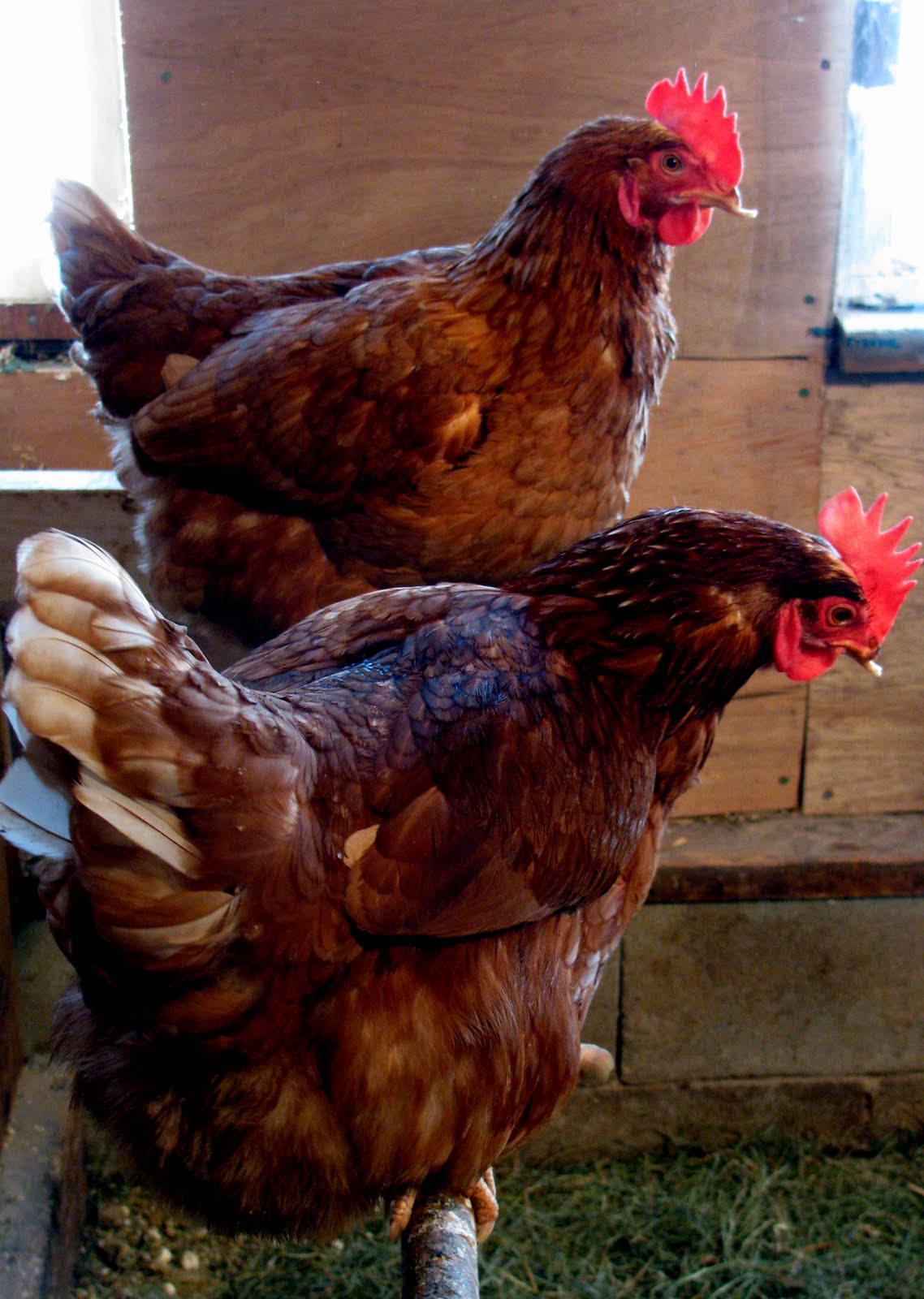
The chickens are all excited about spring. They seem happier and plumper and calmer. These two are the explorers of the group. They are usually to be found in the pottery studio if I leave the door ajar even a bit. They are friends and they tend to travel with each other. I call them Thelma and Louise.

This morning, when I went to get the eggs for my morning meal I was aware of all the eggs around the world that were handled yesterday. I was aware of the merging of the pagan ceremonies around eggs and fertility with the Christian ceremonies of new life and hope and potential. The eggs had just been under the butt of a hen and were warm and smooth and brown and very big.

In a split second I was able to see, with gratitude the giftedness in my life - the gifts of friends, the gift of support through life, the gift of clarity and prayer and meditation and exercise and a simple egg on toast.

Of course there is the grief of Holy Week. It still echos a bit like music in the rafters of a great cathedral three seconds after the choir stops singing that last strong note. And that echo of betrayal and sin and evil - the narcissism which Jesus came to modulate still hangs in the air a bit like last night's fried fish smell. But the hope of Easter - that truth will win out even when it seems everyone around you is rooting for Barabbas - that truth smells fresh today and is cool like night spring air and full of the potential for healing. This is a week of healing.

My eggs will be fried today, in a browned butter with a bit of curry powder in it and served on toast with a bit of mango chutney on it. The excitement and the self-gratification of sin is, I admit, enticing, but the simplicity of this egg in the creativity of a new Stonewall Kitchen recipe for fried eggs (who knew there was a new recipe for fried eggs!?!?), that simplicity of life seems to be part of the Easter Healing. Wake up, stand up, live, love, tell the truth, breathe, pray, taste, limit, channel. It can feel dull but it is a good thing.

Sunday, April 4, 2010

Anastasis


Egg tempera on wood, Greece, 2000, the Anastasis Icon from 7th century Chora Monastery in what is now Istanbul.


Jesus is raised from the dead, emerging from the almond-shaped symbol of both the female reproductive organ and the intersecting circles of heaven and earth - the "mandola- from which we get the word "almond"; Jesus arrives in power to crush lies and manipulation forever and establish a reign of truth. He arrives from the grave with the female hips of a life-bearer, accentuated by a waist band and the gyrating legs of a strong-man pulling Adam and Eve from their helplessness by loose wrists. Satan is at his feet amid the coffin and the implements of Jesus' betrayal and death in darkness of lies and "obscura" which is the dark night of sin's confusion. On Jesus' left are John the Baptist, King Solomon, King David and Moses. On Jesus' left are Abel (the first innocent to die at the hand of a loved-one, Cain, who killed so that he could have what he wanted, when he wanted it). Behind Abel are Peter, John and James and an unidentified disciple.

Saturday, April 3, 2010

Really !?! ....Really ? This was the plan?!?!


The title of this bog came from Phillip, a friend of mine and spouse to one of the diocese's clergy. He and Miranda hosted and sculpted a liturgical "wake" last night at St. Andrew's in Hopkinton which was one of the most beautiful and creative liturgies and worship opportunities I have ever encountered. And having been a monk and a liturgical consultant, I have seen many impressive liturgies. The monastery in which I lived was world-renowned for their lavish and stunningly beautiful liturgies and I was particularly missing the SSJE Good Friday Liturgy (one of my favorites there - other than the Great Vigil) when I realized that I needed to, as my spiritual director said once "bloom where I am now planted."

The liturgy was very simple and very inexpensive (about $20) but stunningly moving and engaging. The lights were low. Tea (only tea - but good teas!) was available in big mugs and fresh hot cross buns were overflowing from a huge bowl - such a symbol of bounty - like, I suppose- a buffet at a wake - overflowing and bountiful.

There was a small circle of chairs set for intermittent gatherings of those present (it was drop-in from 8-11 pm)and between two huge, ancient beams was a coffin -and on it was an almost life-size icon on wood in paper and gold leaf and paints. The long icon covered the entire coffin and was of the Christ layed out in wrappings; quite dead. It was stylized and very beautiful - serene and peaceful and elegant and honest and unpretentious.

At the foot of the coffin was a small table with tools for those of us who had come -spices we could smell and place on the body, incense we could burn at His feet as would have been done in the burial caves, tall, Orthodox beeswax candles for memorial to other griefs - past funerals - deaths of friends or friendships or hopes or dreams or lost innocence or lost naivete. There were tulips to place on the coffin - on the icon. The tulips were fresh and bright and optimistic and simple (about $10.00 worth - breaking no parish budget).

There was a prayer bench next to the coffin and a few Windsor chairs (Hopkinton is, after all, a bit elegant!) There was no music to dull the sadness or anesthetize the pain and stillness of having to sit with one's own thoughts or lack of them. The speaking was only occasional - an invitation for those around the room to gather, to sit, to talk about the beloved who was dead - this Jesus. We spoke of Jesus as of a friend who had died today or recently. We spoke (those who could without tearing up) of our sadness and our complicity and our hopes. We sang a simple chant - a few lines, in shaky accapella, and then went back to mourning - everyone doing it in their own way. After a couple hours of people arriving and others leaving, we ended by Phillip's covering the icon with the shroud of the coffin, blowing out the candles, stepping back - away- slowly - backwards. And then singing an ancient Christian chant of the dead. We left in silence - taking home some of the Hot Cross buns. There is one here this quiet mourning - morning - with my coffee before I head off to lead a Holy Saturday retreat with the above icon of the Myrrh Bearing Women at the empty tomb.

What Phillip and Miranda offered to us last night was stunning in its simplicity and in its creativity and power too. There were so many tears last night. So much disappointment and so much grief of past hurts felt and done. So much confusion with God answering none of the questions. Not even the one Phillip spoke when reflecting on how the disciples must have felt in the time between horror and awe - that in-between time of numb dismay. Phillip, breaking the silence of the evening said simply "REALLY?!?! ...... I mean, REALLY!?!? This was your plan God!?!?!"

Easter is so hard to see in Holy Week - ant that "obscura" - that dark night is a healing thing. The tears and confusion seem somehow very healing - Like lancing a boil or pushing a dis-jointed shoulder back in place. A painful relief tears can be.

Thursday, April 1, 2010

Holy Week Icon


The O Nymphios Icon
The Bridegroom
Egg tempera on wood, Greece, 2001
Icon for the first four days of Holy Week


The beautiful thing about this icon is the face of Jesus. It is sad for the circumstance but not sad for himself. He is not defenseless and yet he chooses not to be defensive in this moment from Matthew's gospel.

A friend once told me that "there is no need to be defensive if you are right and true. Your enemies will not believe you and your friends do not need it."

Pilot asks the most important question of all. "What is Truth?" and Jesus steps out into the crowd and shows him. Jesus believed that Rome was wrong and that love and honesty and truth and fidelity were right. He gave himself over to that surety, following the truth he had discerned in his quiet prayer time with God in the dark of early morning.

"Speak the truth, lead where it will, cost what it may."
Phillips Brooks

Such a leading! Such a cost! Such a Resurrection! We all just hope for God to make good out of horror and God seems always to do so.

Monday, March 29, 2010

Alone with


The Crucifixion Rondelle Icon, egg tempera with tooling on wood, 18th century, 14 inches in diameter, Russia.


This icon is one I purchased in the Kapali Carsi in Istanbul while on a trip sponsored by the Episcopal Church to continue conversations between the Anglican and the Eastern Orthodox churches. I went back to it every day for more than a week at the end of every work day. It was in an antique shop and is of Russian Origin. It is a round icon which originally would have fit into an iconostasis- a great wall of icons which separates the Holy of Holy in an orthodox church from the sanctuary. The icon is 17th or 18th century, is wood about two inches thick and covered in a heavy gold leaf, tooled for a celestial texture to imitate the idea of a window into eternity.

I purchased it because I have a deep love of the Gospel of John.

The gospel writers had their misconceptions as they all do, and they confused words like "Jews" when they should have said "lawyers" when discussing the fault of the crucifixion - but we all have our misconceptions don't we. The Gospel of John is stunningly beautiful and celebrates women and love and intimacy unlike any other gospel. It allows Jesus to be as Divine as he is human rather than the other way round. In many holy sites (the Holy Sepulchre and Mount Athos for example) clergy have Bibles which are lacking the Gospel of John. They have ripped them out of their Bibles - not out of shallow loathing but rather out of such a deep love of the Gospel that it is the one they rip from their Bible to give to friends who ask "Why do you love Jesus so much?" or "How do you know God loves us?"

This icon is Johannine (which means "along the lines of John's gospel") because of the way Jesus is portrayed. Jesus is not hanging from the cross. Jesus is layed onto the cross. There is a difference in ideology rather than in form or historical fact. It is true regardless if it is factual. The way his body drapes onto the wood rather than hanging from the nails alludes to a self-offering. Jesus offers himself to the world at noon, while the screams of the butchered sheep can be heard from the Temple compound. And the timing is intentional. "Here, take me if you must but leave the bleeting ones alone! they are scared is all!" Are the bleeting ones sheep? Well, some are.

Jesus had support while he was doing what seemed to be the right thing. Jesus was not alone in that his mother and his best friend and many others did not desert him. And Jesus was not alone in that his prayer and his meditation - that union He enjoyed with God through the hard work of prayer and silence-making meant that He was not alone from God. And yet he was and, in the end, felt - it seems, very much alone. The agony of Gethsemane show a man who felt alone and did not want to do what he was needing to do.

We are all "alone" and yet, also we are "with."

But we are "alone with." Much like Christ, we are loved and even cherished and enjoyed by those we love and whom we love if we work at doing the loving well and with intention. But in the end I think we are still very much alone. We enter the world alone and we leave it alone and we inhabit our body alone. At the crucifixion Jesus is in his body (trapped in it I would say) and is there alone.

It is sad that the Renaissance painters seemed unable to paint a beautiful painting without including a dying Christ in the middle of it. After a few weeks in Florence one can hardly stand to see the crucifixion one more time without a scotch, an advil and a cigarette! But that may be because the image of the crucifixion strips bare the reality that we are alone in our bodies and the desperate attempts we play out to "fix" that infirmity rarely last for long often causing so much harm.

It is amazing what we humans will do and will risk - what we will destroy and whom we will destroy to fix our sadness at being alone.

But the art of being "alone with" seems to make some sense even though it is slow in coming and has its frustrating boundaries. Being "alone with" as Christ is at the cross - alone with Mary (at Jesus' right in blue and dark red), alone with John (at Jesus' left, young and in blue and light red), alone with God (wearing the tooled Gold of eternity stretching out behind them)- this being "alone with' is what makes sense to me and is in high relief at Holy Week.

Being "alone with" is not something I find easy to do. My codependent upbringing can get in the way. But as my spiritual director in Richmond used to say "we are, all of us, in Jesus' little school," learning our lessons by watching his life - trying to live ours in some integrity.

I use to struggle so hard not to be alone. Now, I struggle less with being alone and more with making sure the "with" is well cared for.

Saturday, March 27, 2010

Art and Life


Crucifixion, stoneware clay with cone 10 reduction glaze and resist corpus, 25" by 6", 2009, Blackwater Bluff Pottery


Whenever I do a pottery exhibition of artwork, I try to center it around a theme. This show was around a series of sketches I had done at the Ashmolean Museum in Oxford, England where there are some lovely examples of classical and brittish pots. I chose shapes and colors which spoke to the inner landscape of my own experience here at Blackwater Bluff. They had a decidedly asian bent and yet the overall effect was more diverse than simply asian forms.

As I look back on the exhibitions I wonder how my internal life as a Christian and my art are intertwined. I wonder at how God made us so that we would be so in God's image that we too could create - could be generative even if not female. Pottery and hospitality are my generativity. The pots I make with my hands and the friendships I make with my love and my hospitality are the two most important aspects of my life.

I am often stunned at how much our culture produces - how much money and how many services and how many things. But when you look at art and craft, there seems to be so much less of it than when times were slowere and people were less wealthy.

I notice the lives of those I know who have no creative outlet and I want to lean over and whisper "live!" To make things simply for the love of the making is an act of self-offering - risky, hard, scary and rewarding.

Wednesday, March 24, 2010

Expectations


My Dog "Kai" seems always to have a wonderful countenance combination of expectation and presentmomentness. I expect that "presentmomentness" is not a word, but I think it should be. And not a hyphenated word. I mean a real,new word.

When my Dad worked in the aerospace industry as a writer in the 60's he had to write all sorts of articles about things that were just being developed. Often, he would need a word for something for which a word had not been developed. When you look up "fluidics" in a dictionary, you are looking up one of his words - the study of how fluids work and move - since at the time, they were studying that in space. Every time I see my lava lamp (I LOVE my lava lamp!)I think of my dad - partly because of his word and partly because he would find it funny that I have a lava lamp in 2010 as a mid-lifer (at least I hope I am a mid-lifer - one never knows).

Kai's presentmomentness is particularly pronounced when seen up against this painting of a Thai monk. The ability to be peaceful and present and yet at the same hopeful and expectant is a wonderful thing. Some people live only in the expectation of the next thing, thereby missing the present moment. Others are so mired in the present, good or bad, that imagining the hope of the future evades them. But to live in between them is like the rubber band between the balsa wood toy plane body and the propeller. The energy propels. Sometimes into the blue sky and sometimes into a wall! But to fly at all is such a joy!

It seems that the art of living is to find that balance between appreciating the simple pleasures of the moment and risking to wonder what could be that is not. As I look at my friendships, everyone of them exists and is fed by that hope of becoming rather than just the confinement of possession. And when the hope for becoming is gone and the bar has been so lowered on hope that it rests on the ground, it needs to be lovingly and firmly set aside so that presence and hope flourishes in those friendships which give us life.

Friday, March 19, 2010

Baby Back Ribs


Today is my sabbath day and a friend is coming over for dinner and a movie. We are having baby back ribs (recipe below!).

Yesterday I made pork chops for a bit of a crowd. I love to cook on my day off and love even more to cook for my friends. I think it is hysterical when people think they are friends but do not show up physically (unless they live far away!). It takes effort and planning and a decision to say yes to a friend and no to many other possibilities for anevening - and yet showing up is what makes a relationship.

My concern is that there is so much counterfeit "relationship" out there. Looks like it, smells like it, sometimes even feels like it, but unless we are able to physically be with each other, along with the sacrifices that demands, I wonder if it is a relationship or simply a friendly acquaintance. And a friendly acquaintance is not, in any way, a bad thing. But it is not a friendship. And I wonder if divorce rates and adultery would be quite so high if actively and carefully nurturing of friendship happened more consistantly.happened by showing up - by self-offering - by personal sacrifice of "I" to "we."

When I look at our shy, longing God and I look at Jesus' life and death and life - and when I look at the primary design of humans as being made in their "image," all I can see is the importance of self-offering and sacrifice between friends and lovers.

We are such a wordy society - spinning phrases and lines and spewing words by the mile. But it is deeds that seem to show me who is whom and what is what. When my friends show up- physically arrive and spend valuable time, the relationship moves forward and deepens. When they do not, it gets what it gets - which, sadly, is not much. And that is fine. Some fruit needs to die on the vine so that other fruit can live and flourish!

And this is my rib recipe:

Baby Back Ribs

Cut a rack or racks of ribs it into about 5 rib chunks, so that it will fit into a pot. Fill the pot with water with salt, pepper corns, bay leaves and onions and bring it to a boil.
Place the ribs sections into the pot and boil it for 45 minutes.
After the ribs boil for 45 minutes, take them out, drain and dry them and do a dry rub or sauce as you like.
Cover them with tinfoil and refrigerate for several hours. (if you do this part the previous day or morning)
Remove from refrigerator and cook them in the oven on 250°F for 3 hours or 200 for 4 hours, then remove the tinfoil from the top, and broil or hot-grill sear them for 5-10 minutes for a crispy rib. Eat with Cornbread and salad!

Thursday, March 18, 2010

The Monastery


I made my annual Lenten Retreat at the monastery last week. It was a short visit since my annual retreat in April is soon upon me.

Times of retreat and re-collection are so valuable to the soul and to the body. The Chapel of the monastery (above) is designed by Ralph Adams-Cram to be feminine and womb-like. He intentionally chose glass of blues and oranges and reds while the grey stone and curved walls have a cave-like atmosphere which is meant by the architect to hearken back to the caves of early monks but which, to me, remind me more of the tents I used to create from chairs and blankets as a small child - a way to be "in the room" with my family and yet at the same time hidden away and enjoying some privacy and silence.

One goes to a monastery to "be alone with God" hence the "mono" in Monastery" or "monk." And that, I found over time, did not work for me since I find God most in other people and so being with them is as close to being with God as I can seem to muster most days. But that does not mean that I did not love being at the monastery and did not love the cloister and all that it provided and all that it protected me from. For its time, it was perfect and wonderful and some days I miss it terribly. But I miss a fond memory and not the daily realities, which is just fine and relatively harmless. Life is better with just a pinch of the romanticised.

It is often hard to find the time to go off to a monastery, but finding a day in which one may hide away and think about life is a good practice - essential for clergy and very good for everyone. Calling in sick works - even if the sickness is spiritual. It is a time to check the map, hold a finger up to the winds which blow, and listen for what has just gone and what may be coming.

I know a very few people whose lives are completely unexamined. They frighten me for the damage they can cause. They simply do what feels good and whatever results appear for others is not their problem. These people live compartmentalized lives in which things are walled off from each other so that there is little integrity (wholeness), little conversation and commentary between the parts. They have to live this way because any other way of life would force them to feel what they are doing instead of just doing it - and the feeling would be too painful without change. And change would result in not getting what is want and for them, nothing must be allowed to get in the way of what they want for themselves.

I know this about these people because I could so easily be one of them and have been in the past and without great care could be tomrrow, or the next day. It is hard work not to let that way of being creep back into my life like weeds - and some hours or days I fail. But most days, because of times of re-collection - of collecting the day and the hours and examining them -because of times of recollection in retreats big and small, I can hold my life up to God so that God can show it to me from His point of view and adjustments can be made.

The protection I used to get at the monastery huddled inside the cloister in my habit is now an enclosure I must make for myself. No need to be walled off from everyone as long as I can keep a wary eye on the unexamined lives around me so that when they blow - and they will - I and those I love are not hit by the shrapnel.

Tuesday, March 16, 2010

Becoming


There is a silly irony in the fact that when I was in college I wrote an angry letter to the chaplain saying that pottery had no place on a high alter. Silly boy! How funny that decades later I would be making pottery like this for altars all over the place!

But we grow don't we. We are in a constant state of becoming. And God is in a constant stance of encouraging our becoming.

The vegetable garden is now uncovered from snow and the work has begun to drag off last year's mess so that the soil can be overturned with the hay from the chicken house. I have high hopes for my garden, just as God has high hopes for my becoming. But becoming is slow work.

Slowly I can see the results of my upbringing - good and bad and ugly and lovely. Slowly I am learning what is good for me and what is bad for me. Who is good for me and who is bad for me. Who loves me and who uses me. Who is speaking hard love to me and who is speaking soft lies to me. Or is it "whom?"

The good thing is that every day I get just a little better at living life just like the pottery grows and becomes my vision for it with every turn of the wheel-head. As I spin on the pottery wheel of life, it becomes very important what and whom I let form me. We can so easily think that without God's invitation to our formation we are simply formed more slowly. But I am sure that is not the case. Other things form us in the void. Other people. Other interests. That is why our Lord's Prayer refers to "things left undone" without skipping a beat from the "things done" line of the confession.

As I dig through the garden I can see all thoose dead weeds. I wonder what more my garden could have been last year had I worked harder on the weeds. Things left undone.

This year's garden will be better. Less weeds - more vegetables. This year's relationships will be better. Less weeds there too.

My pottery spins under my fingers. I hope and pray my life spins under God's. And it does, most days. And every year and month and day that passes, I get better at recognizing counterfeit potters trying to touch this clay God is making into something - a vessel I think. A becoming.

Thursday, February 25, 2010

making sabbath rest


It seems like God had America in mind when God assigned a day of rest as one of the ten commandments. In all three listings in Exodus (two of them) and Deuteronomy, God is so very clear about the Sabbath day. And in the creation myth God names the Sabbath day as the first "Holy thing" which is a big deal for God because calling something Holy is just not done lightly in scripture.

This little pottery studio on the edge of the pond by the forest is my icon for sabbath rest. I go there to be alone and though I love to invite friends into it, I do so rarely. The building is surrounded by windows and flooded from inside with industrial lights. It is warmed by a wood stove and has cathedral ceilings (well, perhaps not "cathedral"...perhaps more like "sort-oflarge vaulted church ceilings).

When people say to me "Oh I wish I could meditate every day" and "I wish I could be an artist" my response is simple: :"Set aside a place for it and it will happen."

If you want to pray daily, find a comfortable chair away from the center of the action and place next to it a prayer book. Go there daily - even when you don't feel like it. If you want to do some creative act like knitting or painting or poetry or calligraphy or jewelry making - just set a small place aside, keep the materials there - never move them - and it will call to you. The place itself will actually call you over to it. I can't explain it but it is true. The "place" will come alive and it will summon you , woo you, coax you, call to you, whisper to you, seduce you.

I believe creativity is one of the most powerful forces for good in the world. And anything that cuts at creativity, the most damaging.

Sabbath rest is not just sitting there covered in Cheeto dust in front of a television or a computer. Sabbath rest is ideally infused with creativity - making things happen - generativity.

As we look around us at this creation, it is constantly giving birth to itself. The creation is constantly creating new species and new life within those species. God is constantly creating new life from death. If we are - and we indeed are- made in God's image, well then we are made to create. And not creating is not living into our fullest humanity.

The creativity of raising children well, the creativity of reinventing vocations and marriages rather than simply casting them off in exchange for some new bauble, the creativity of making a good soup and inviting two friends over for conversation and the creativity of a potter or a painter or a writer are all a response to Gods gentle whisper:"Take what I have given you and MAKE something wonderful!"

And the weird thing is that the "work" of creativity seems to me to be more restful and more fulfilling than just "spending time" on things unworthy of being the artists we all naturally are made to be and to become.

Monday, February 22, 2010

One never knows 'till one tries


As I move into middle age, I find that the more I begin to understand myself and the more I am patient and gentle and loving towards myself, the more likely I am to be able to stand up for myself. Our society tends to so encourage us to push ourselves! Succeed, win, strive, acheive! Our society demostrates who it is in its television - now largely reality television , news, ads and sports. In each, the goal is to say one person or one thing is the best and is better than another person or thing or team or way of being.

When I was a small child I was told by vocational counsellors and doctors that I would never be good at hand-eye coordination. Anything that required my hands to work with my eyes was, I was told, going to be an activity at which I could expect to fail.

Then one day I was in a pottery studio and gave pottery a try. My first pot was humble to be sure, but it was a success! And I found that, as with most things, the more I tried, the better I became at making pots from clay and water.

And so now, in my forties, I am wondering what else I have been told that I too quickly believed. I am also wondering what I have been telling myself that I have too quickly believed. Like the man in his teenage years, this man in his middle age is trying new things he thought he could not accomplish and lo and behold, I can do still more things I thought impossible.

I recently stood up to a bully and won the day. I was stunned! It made me feel strong in a way I had never felt strong before. It was no longer the school yard but sadly, bullies move out of school yards and into adulthood just like the skinny guys who got sand kicked in their face. And like the shadows in the darness of a room at night, once you stand up to a bully, he or she all of a sudden looks rediculously small and sad.

The pots I make remind me that we never know what we can accomplish in life until we stand up, throw our shoulders back and live honest, powerful lives around which God whirls in the winds and laughs in the thunders and loves in the generativity.

Friday, February 19, 2010

growing steel ones for Jesus


Anthony of Egypt was the first "solitary" and thereby the first "religious" or "monk." He was from a wealthy family but chose to leave the madness of the city to go out into the desert to find a cave in which to sit and think and live. Actually it was all harder than that but it makes a good story and it is true but I expect it was harder than it seems to us what with no bottled water, granola bars or flashlights. While there, in his cave, he was able to focus on what was going on inside him and what was going on around him. Some might say that nothing was going on around him, being that he was sitting in a cave alone, but I would disagree and I know he would too.

By placing certain boundaries around his life, he was able to see what could not be seen any other way. It is like the difference between looking at the stars in the middle of a brightly lit city and looking at the stars from a field in the middle of the darkest woods of a large forest. Take away the light from around and the lights from above stand out. Take away the noises and inputs and distractions from busy, over-stimulated lives and God's voice which is, these days, very gentle seems to come out of the mist of the busy and the loud and the stimulating.

I find it hard to slow down the action in my life so that I can deeply listen to myself and to my God and to my close and trusted friends and mentors. But when I make decisions like keeping a radio off in a drive or keeping the house silent by leaving the cell phone in the car and turning off the ringer on the house phone or taking a day each month for absolute silence - absolute listening silence; then I can hear things I need to hear and see things I need to see and go deeper in that pool of love in which God stands with open arms, waiting for us to take the leap.

Some say this icon of Anthony which was written for me in Greece, is stern - even grouchy. But I wonder if that is a projection in this Hallmark-card-society we live in. I see a man focused, powerful, fearless of seeing and speaking the "truth - lead where it may and cost what it will " (as Phillips Brooks would say.) This man in this image shows the strain of knowing the truth and the power of speaking the truth, and although you cannot see them, I expect his are made of steel!

Wednesday, February 17, 2010

fire from these ashes


This is my first pot. 1982 in Vermont at prep-school. I walked down into the basement of the library where I found a pottery studio with two rickety wheels. It was Saturday and I sat on one while a friend was on the other. He was throwing a pot and so I took some clay and did one too. It is not very pretty but I still have it after all these years. I even kept it when I went to the monastery.

Now, almost 30 years later I am a master potter.

We can never know how much we will grow but we must continue to do so. God is cultivating us - each and every one of us. God is encouraging and loving and cajoling us into being set free from the prisons into which we have locked ourselves in the hopes that freedom is a more attractive option for us.

This week, as I head into Ash Wednesday today I am aware of that freedom in a new and very powerful way. I am aware that the prisons of my life are becoming fewer and fewer with each passing year of healing and spiritual and emotional growth. As my body ages and I grieve the losses of life, I also celebrate the freedoms of life.

What I have noticed on this farm is that it is out of decomposing life that new life grows. Some things have to die in order for other better, stronger things to take root and live.

What I noticed these last couple of days is that the things I think die in my life are just fantasies which need to die so that truth can live. There is still mourning and sadness at the loss of hopes, but I find, more often than not that the death of things which need to die in my life give me energy and hope and joy and a lightness-of-being which makes me feel like my feet are off the ground and that perhaps I can fly one day!

The pain of "becoming" is completely overwhelmed by the joy of becoming. I will always cherish that little Vermont bowl which I keep in a glass case in my pottery studio on a small mahogany stand. It is there to remind me that all the cuts and all the burns and all the broken pots and all the failed museum openings in my life as a potter have contributed to the beauty of my pots today and the ease and speed with which I make them.

Living and speaking truth will be hard and may come at a high cost and may lead to places unintended, but the freedom of truth is, I think, this "life abundant" of which our scriptures talk. What a wonderful, wonderful Ash Wednesday. Let the old things burn and burn and burn. And from these ashes let new life-abundant come!

Saturday, February 13, 2010

Transfiguration Sermon


Last Sunday of Epiphany
Transfiguration Sermon preached by
The Rev. Canon Charles LaFond
February 11, 2010
The Church of the Good Shepherd, Nashua, NH
© 2010, Concord, New Hampshire. Use in whole or in part by permission only.


Luke 9:28-36, [37-43a]
About eight days after Peter had acknowledged Jesus as the Christ of God, Jesus took with him Peter and John and James, and went up on the mountain to pray. And while he was praying, the appearance of his face changed, and his clothes became dazzling white. Suddenly they saw two men, Moses and Elijah, talking to him. They appeared in glory and were speaking of his departure, which he was about to accomplish at Jerusalem. Now Peter and his companions were weighed down with sleep; but since they had stayed awake, they saw his glory and the two men who stood with him. Just as they were leaving him, Peter said to Jesus, "Master, it is good for us to be here; let us make three dwellings, one for you, one for Moses, and one for Elijah"--not knowing what he said. While he was saying this, a cloud came and overshadowed them; and they were terrified as they entered the cloud. Then from the cloud came a voice that said, "This is my Son, my Chosen; listen to him!" When the voice had spoken, Jesus was found alone. And they kept silent and in those days told no one any of the things they had seen.


Transfiguration Sunday is the last Sunday before Lent and is the moment when the soundtrack of the gospels turns from major chords to minor chords. The music which could be orchestrated for the soundtrack of the gospel shifts here from something one might expect in Walt Disney – virgin births, angels, lots of wine at weddings, lots of fish and bread in grassy meadows, animated squirrels on Jesus’ shoulder and a faun nibbling grass next to his feet.

There is, here, today, a shift to something one might expect in a scary movie – that moment when the guy hears something in the basement, opens the basement door (while we all scream “no. don’t go down there!” in our minds). He then reaches into the darkness as we cover our mouths with our hands and unconsciously move our knees together. He flick s on the light but, of course, the bulb happens to be burned out…so he descends the basement stairs into the horrors of goblins and darkness which await.

This gospel has very similar themes of light and darkness. Here we can see fluffy clouds on a blue night sky pushed back by the light of the transfiguration of Christ. And beneath him, in the basement of the painting by Raphael is the chaos at the base of Mount Nebo, eight thousand feet down in the town to which they will go in the next scene there is darkness and chaos.

When Raphael painted this painting you have before you in 1516, he was on his way to death, in part, by exhaustion. The artist was so famous and so sought after that he literally has villas and churches and cathedrals and popes and cardinals all with orders for paintings waiting to be filled. The artist was in his own kind of chaos and he let it come through in this painting. What marks most renaissance paintings is something called “chiaroscuro” which in Italian means “LIGHT-DARK” and was a common technique in painting themes of joy and sadness or good and evil or right and wrong.

Here, in this paining, Jesus is almost shaping his floating body in the form of the cross to which he will soon be nailed. He is lit by the conversation of Elijah and Moses – the two great figures of Israel’s’ past - whose conversation was about Jesus’ “departure” says our gospel, but the original word would have been “his exodus.” The path way which will lead from this moment to the cross and to the resurrection. It is the conversation of Moses and Elijah which lights Jesus like the element of a light bulb between two electrodes. It is the pain and suffering Jesus will go through which is the light and the glory of the transfiguration. So the happy light and the sad darkness is not what the artist is doing here. It must be something else.

And I wonder if there is a clue in the arms. If I meditate on this image for a while like one would use an icon, what seems to hit me are the arms! There are arms everywhere! Jesus’ arms are up in the same position that a priest uses to bless the Eucharist and on the way to the out-stretched arms of a crucifixion. The lack of arms waving on the two ghosts is also reflected in their grayness – as if they are body-less voices or memories or floating worries and fears and sign-posts. The arms of the sleeping Peter, James and John are all touching their faces, protecting, shielding? And the arms of the people below are a mass of chaos – flying in every direction – this way and that way. And the boy who is possessed by some spirit. His eyes are huge ands his arms simultaneously reach to Christ with a hand shaped in blessing and the other hand open and reaching to hell.

Jesus of the Transfiguration is Jesus who saves. No longer are we wondering if this is some pre-menopausal Santa Clause! No longer is Jesus just a nice man who can do cool tricks. No longer is Jesus a self-help coach or a good-luck charm we turn to when things go bad or a thing on a chain around our necks which is a sign to the world that we have the “goes to church” box checked on Santa’s “nice list.”

With the transfiguration, things shift – the music, the light, the tone, the colors and the body language. This moment is the wound of knowledge – that thing one all-of-a-sudden-knows that one can never not know – never un-know. The transfiguration is the sing on the path of existence that says “suffering, death, salvation and glory – this way.”

Moses and Elijah were figures of Israel’s exodus from the slavery of Egypt to the Promised Land. Jesus lights up between them as the new exodus – the new freedom from the slavery of fear, the slavery of chaos, the slavery of our terrible choices, the slavery of global wealth and global poverty, the slavery of needing a savior.

For the writers of Luke’s gospel, Jesus is not the savior coming down the mountain to heal the boy in the midst of the incompetence of the disciples. Jesus is the Savior of the whole world, God coming down the mountain of the cosmos to be with us in a world of people which, at times, seem well beyond saving.

The transfigured Christ, like the resurrected Christ, demands that our Walt Disney view of Jesus shift. The transfigured Christ demands that the chaos of flailing arms calm into arms raised to Christ the way Christ’s arms are raised in this paining. The Transfiguration demands that whatever domesticated doily the church has made Jesus into be returned to the physical strength and generativity of this painting’s savior with life-bearing female hips.

The transfiguration demands something Americans and especially Anglicans are not very good at. The transfiguration demands adoration. Not gentle nods of pious recognition. Not sanctimonious handouts to the poor. Not 90 minutes a week on a Sunday. But radical, counter-cultural, face on the floor, arms to the heavens adoration.

This moment in the gospel opens Lent in order to shock us out of our arm-flailing chaos and into making a Holy Lent – not by what we give up but by what we choose to adore – by a shift of focus.

What do we adore? Is it our standard of living? Our intellect? Our savings? Our degrees? Our furnishings? Our physical prowess? Our movie stars? Our tennis stars?

This Gospel is inviting us to re-focus our adoring gaze away from our mirrors and televisions and into the glory of God in Christ.

It is true what doctors say.

Physically, we are what we eat.

But it is also true what the gospel says.

Spiritually, we are what we adore.
batter bowl


One of my favorite forms in pottery is the bowl and this is one of my favorite bowls. I designed it because one day I was having trouble making pancakes when the bowl kept slipping as I stirred the batter.

I have a deep love of pancakes on my sabbath day - buckwheat is my absolute favorite. But I found that holding the bowl with one hand and whisking with the other made it hard to hold the bowl unless one wraps an arm around the bowl in which case one gets batter of flour all over one's shirt -or in my case, one's footie-pajamas!

So I put a little curl of clay on the side of the bowl so that my fingers could go under the bowl and my thumb could slide into the loop. I then made a spout for the batter to pour slowly (I like control of my pancake batter flow). And voila! I had a batter bowl. This is my invention, so if you try to copy it I will put a frog curse on you so do not try! My sister Linda says I need to send it to Oprah or Martha and get huge publicity. The problem is I am a better potter than I am a packer and mailer. All too much trouble. But last night I made six bowls while I watched Ship of Fools.

They sell well at the Canterbury Shaker Village Museum Store in three sizes and three colors! And now...off to make pancakes!

Friday, February 12, 2010


The thing I notice about my chickens, other than the fact they they are about as demanding as a group of five world leaders looking frantically for their secretary, is that they like being together. In fact, when I am in the chicken house they like being with me. I thought for a while that it was just that I brought the food and the water and the fresh straw (though I admit, perhaps not often enough). But then one day I fed them and stayed in the room for a while before collecting the eggs in order to complete "the transaction." I hung out and they cam over after a bit of nosh in order to say hello and ask me how my day was going. They did not use words of course (well...once they did but every time I mention it, people look at each other and roll their eyes so I keep it to myself!) they just cluck around and peck gently at my boots and let me pick them up and pet them like a cat. I think they kind of purr....well, not so much purr as stop cackling and get all quiet and sort of intoxicated.

I watch them wander the farm on our Sabbath days (When I have a day off - which I call a Sabbath day to piss off my pagan friends- I let them out to free-range - sort of like prisoners allowed to walk the yard.)I am amazed at how they pretend to be all "get-away-from-me-and-let-me-find-my-own-bugs" when in fact they are constantly eyeing each other and me and never go very far away.

I'm sort of that way with God. I want to pretend I am a master of all I am doing and the creator of the vision of, my life - all very..."blah, blah, blah, look how great I am, blah, blah. " when in fact I keep looking around for signs that God is not very far away. Problem is that when I turn my head to find him, our noses touch which freaks me out and I pee a little. But I am glad not to be alone. And glad to be so loved. All any of us want is relatedness. I just wish the Church was better at facilitating it.

Monday, February 8, 2010

simplicity


What seems to most attract me is the shape, beauty and service of a simple bowl. My favorite pottery form is a tea bowl, but these bowls I also find attractive. I like the way they turn in at the top. It makes mixing in them easier because the liquid does not flop out while the whisk is doing its work. I like the oval shape because it keeps warm things warmer longer by not having such an open mouth. But mostly I like how uncomplicated the shape is. These bowls just sit there ready to do their job, but when the food gets to the table, all they do is present the nourishing food.

I long to live a simpler life so that I am that way. I want to offer my friends warm, nutritious food and friendship without being anything more than the conveyor of the nourishment and warmth. I believe that all love and all generativity comes from God. And I believe that we humans and the rest of all creation are simply the conveyors of that which God would lavish on God's creation.

As I look at creation and look at the universe which is available to me and look at life as I see it here on this tiny planet I am amazed by people who cannot see the existence of a creator and loving nurturer of life. This earth with is complexity of interaction and beauty could no less have happened by an accidental explosion than a car could be left having been assembled and purring with the engine running and the seat warmers warming after a tornado whipped through a car factory.

But what is hard is not to be too greedy and not to let life get too complicated and not to miss the love and friendhip which seems to have been the point of all of this.

Friday, February 5, 2010

Alone versus lonely


"A man can be himself only so long as he is alone; ... if he does not love solitude, he will not love freedom; for it is only when he is alone that he is really free." [Schopenhauer, "The World as Will and Idea," 1818]


Solitude is a wonderful thing when one is centered and feeling well about oneself. Solitude allows time to reflect and to sit with feelings - even the unpleasant ones - so that healing and integration can occur. But solitude's joy can, in my life at least, so easily turn to loneliness like milk turning in the refrigerator so that something that was wonderful becomes something that is hard to choke down.


I wonder about being alone and being lonely. Being alone does not bother me and sometimes I need it. Being lonely is a very different thing and can happen just as easily when I feel isolated in my farmhouse as when I am in a group - but unhappy being there.

The Rublev Icon (above) reminds me that I am never alone and that loneliness is something which I bring to the table of life and that when I do, it rarely goes well for me. Loneliness is a choice even if that "choice" is the sum of many choices which repell the people in our lives.


It can be hard living out in the countryside as I do. My dog makes it possible as do my friends. Friends visit and they call and that keeps my living "alone" feeling serene while keeping "loneliness" at bay - most days.

God lives in a constant state of joyful and loving community as three in one - three persons in one God. As hard a concept as that is to understand, it is comforting to me to be invited into the love and life of a God whose existence is at a table with a chair welcoming me and all of humanity to it. Even when I feel lonely, this image reminds me that the feeling is just a feeling and will go as fast as it came.

Thursday, February 4, 2010

The presence of a dog


I share this farm house with my English black lab named "Kai." The name comes from "kairos" which is a Greek term for "the time in which God lives." There are two kinds of time in theological terms. One kind of time is chronos time - chronos - like chronology - the clicking of seconds and minutes and hours of human clock time. This kind of time in which humans live on earth, based on the movement of the planets, did not become much of a big deal until the early 1800's when time became "money" in our western culture as factories became prevalent and clocking-in for work became the way people were managed and - soon - the way humanity was judged by itself.

Kairos time, on the other hand, is not linear like chronos time is. Kairos time does not move from second to second to minute to hour to day and to year in a line moving forward in one direction with the past lost and the future unknown. Kairos time is less like a line on a page with notches moving relentlessly in one direction. Kairos time is not an advancement of a commodity which is lost as it moves forward. Kairos time is a way of being.

Kairos time, that "time" in which God lives is not linear but is three-dimensional. Kairos time is a time of constant love, playfulness and creativity. kairos time is not gained or lost. It is not used up or spent. Kairos time is a way of being rather than the being itself. If chronos time is seen as a line with notches in it then Kairos time is "laughter at a dinner table" or "two fiends sharing their lives with each other" or "sex" or "one's favorite food."

God lives in the midst of three persons, as three persons - and God's only experience of "alone" was very brief and still, was in the context of a simultaneous experience of not being alone. God lives in a constant kaleidoscope of love and playfulness and joyful self-expression and a bit of silliness (take , for example, the platypus, the blue-footed booboe or a puppy chasing his tail!).

I named my silly, goofie, loving lab "Kai" because he draws me out of chronos time and into Kairos time. He draws me out of a time of post-industrial revolution time-cards and day-timers and into the silly, loving playfulness to which we are all called every moment and into which we may dive with reckless abandon if we give ourselves the counter-cultural permission to do so.

Tuesday, February 2, 2010

Playfullness


When I left the monastery, I was leaving something I loved but that I sensed was on loan to me. Some people are called to a monastery and some are called through one. I was called through the Society of St. John The Evangelist and it made me the priest I had always wanted to become just as therapy and rural life are making me the man and the monk-ish person I had always wanted to become.

It is hard to remember to do the mourning over the loss of the choices which we do not make even if the choices we are making are exciting ones which seem to be the way forward in the murky fog of discernment.

When I left the monastery, some friends from outside the cloister gave me a small sack of marbles with a note that said "We hope you leave here and learn how to simply play!" I kept those marbles in a small bowl under a lamp which is always kept lit and which is in the center of the house as an icon- a constant visual reminder- pointing to a new way of life with the permission in it to "play." Play-fullness does not come easily to me but I love to do it and, when I decide to, am good at it! Time for play-fullness is so important in a day and a week!

Monday, February 1, 2010

An artistic decision


Here is an example of the addition of a slice of agate to the lid of a large clay vessel in oxidation glaze fired to cone 6. By installing the slice atop the piece, I can let the light show off the stone so that the work holds the stone up to the light. This way I am able to celebrate not only my manipulation of the clay body, the silica and the other natural oxieds which make the piece a "pot" but I can also acknowledge that God has made the earth from which the elements come and God has made the hands which have made the pot.

Some church musicians will sign their work "deo gloria" or some other term which celebrates that the glory goes not to the artist but to the God who made the artist, his or her tools, his or her elements and his or her hands and brain. Am I an artist who "made these things" or am I an artist who simply took materilas and re-ordered them - thereby celebrating the CREATOR, the elements of the creation and the creator or "artist"? I think the latter.

artist (from etymology on line)
1580s, "one who cultivates one of the fine arts," from M.Fr. artiste (14c.), from It. artista, from M.L. artista, from L. ars (see art (n.)). Originally used especially of the arts presided over by the Muses (history, poetry, comedy, tragedy, music, dancing, astronomy), but also used 17c. for "one skilled in any art or craft" (including professors, surgeons, craftsmen, cooks). Now especially of "one who practices the arts of design or visual arts" (a sense first attested 1747).

Saturday, January 30, 2010

co-creativity


This is Blackwater Bluff, an 1848 farmhouse(left) and pottery studio (above) on a bluff over the Blackwater River. I have begun this blog in order to have a wider conversation with friends and family as well as other potters and artists. I do not expect to tell you what I am doing as much as how I am choosing to live. This blog comes out of the enjoyment I get from writing an article of the same name in the New Hampshire Episcopal News - an article the subject of which I would call "rural, domestic spirituality."

Today, I have made a decision about my pottery! The theme of using a stone on the top of lidded vessels is going to be my signature for art vessels. It allows me to be creative with my use of the elements of the earth - chemicals, clay bodies, etc. while at the same time letting "The Creator" be the final word on each pot by taking a "creation" from the earth and mounting it atop the work. It seems a good way to express the theology of co-creativity in my pottery. here is an example.